Indonesia



Booklet Labels vs. Multi-Layer Labels: Applications, Benefits and Key Differences
When a product needs more space for information without increasing its packaging size, booklet labels and multi-layer labels can offer practical solutions. Although both provide additional printable space, they differ in structure, opening methods, and suitability for different packaging requirements.
What Are Booklet Labels?
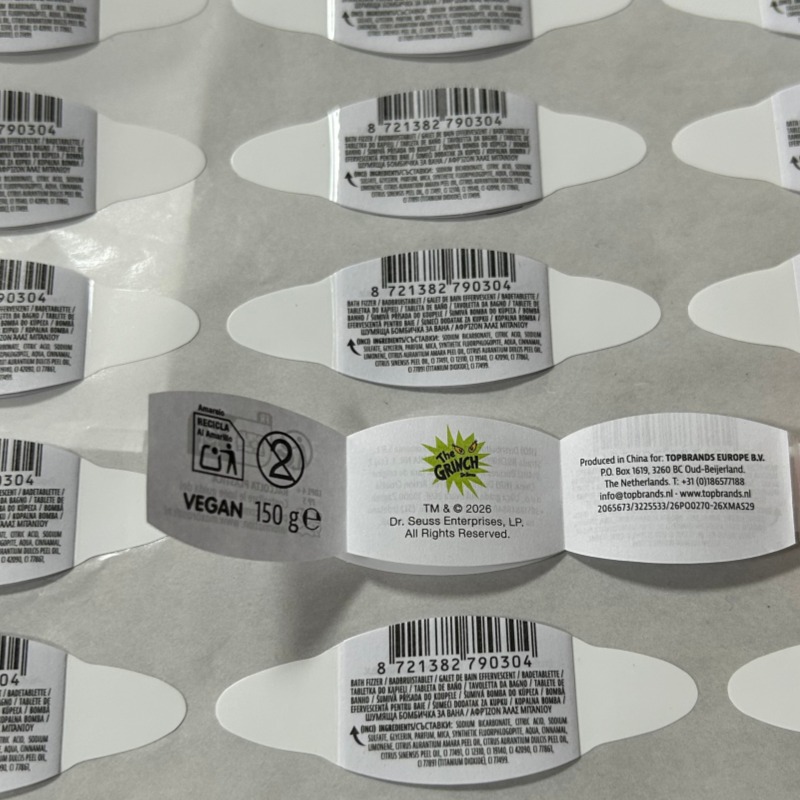
Booklet labels are self-adhesive labels with multiple pages, similar to a small booklet attached to a product. They can be opened to reveal additional information while maintaining a compact appearance when closed.
Key Benefits of Booklet Labels
Common Applications
Booklet labels are commonly used for pharmaceutical products, cosmetics, agricultural chemicals, household cleaning products, and other products that require detailed instructions or multiple languages.
For example, a small skincare bottle sold in several international markets may need ingredients, directions for use, precautions, and translations. A booklet label provides space for this information without requiring a larger container.
What Are Multi-Layer Labels?
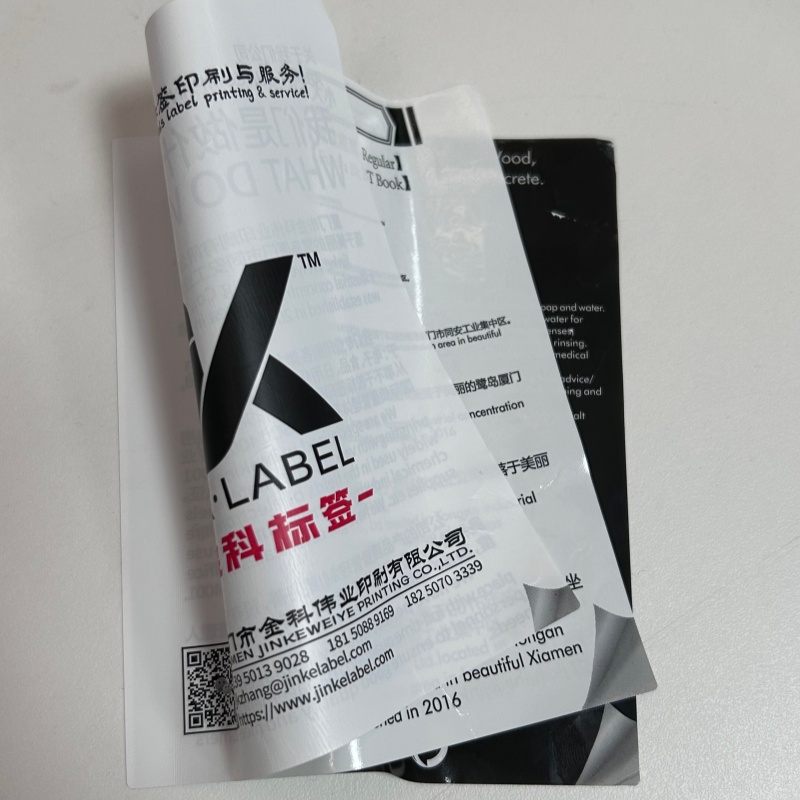
Multi-layer labels consist of two or more label layers or sections that can be lifted, peeled back, or opened to reveal additional information. Depending on the design, the additional layer may be resealable or intended for one-time opening.
Compared with booklet labels, multi-layer labels can offer a simpler construction for applications that need extra printable space but do not require a full booklet.
Key Benefits of Multi-Layer Labels
Common Applications
Multi-layer labels are used for cosmetics, personal care products, food packaging, household chemicals, and selected pharmaceutical products.
For instance, a cosmetic container may display the product name and main benefits on the outer layer, while the inner layer contains ingredients, directions, and additional language versions.
Not every multi-layer label provides tamper evidence or can be resealed. These functions depend on the adhesive, construction, and opening design.
Booklet Labels vs. Multi-Layer Labels: Key Differences
| Feature | Booklet Labels | Multi-Layer Labels |
| Structure | Multiple pages arranged like a booklet | Two or more connected label layers or sections |
| Information capacity | Suitable for extensive, detailed content | Suitable for additional information in a compact format |
| Opening method | Typically opens like a booklet | Usually lifted or peeled back |
| Typical content | Detailed instructions, warnings, and multiple languages | Supplementary product information and additional languages |
| Design complexity | Often requires booklet assembly and page alignment | Depends on the number of layers and adhesive structure |
| Best suited for | Products with extensive information requirements | Products needing extra information within a limited label area |
The distinction is not absolute: booklet labels are a specialized type of extended-content label, and some constructions may overlap with multi-layer designs.
How to Choose the Right Label for Your Product
The right solution depends on your packaging, information requirements, and production process.
1. Consider how much information you need to include.
If your product requires several pages of instructions, safety information, or multilingual content, a booklet label may be more suitable. If you only need to reveal an additional section of information, a multi-layer label may be sufficient.
2. Check the available label area.
Consider the container's shape, label dimensions, and the amount of information visible when the label is closed. Both options can help accommodate additional content without substantially enlarging the label footprint.
3. Evaluate how the label will be used.
Determine whether users need to open the label repeatedly, whether the inner section should be resealable, and whether the label must remain securely attached during storage and transportation.
4. Match the label construction to the product.
The face material, adhesive, liner, and finishing process should be selected according to the container surface and application environment. Curved bottles, flexible packaging, and products exposed to moisture may require different specifications.
5. Consider printing and converting requirements.
Artwork layout, page order, layer alignment, die-cutting, adhesive performance, and application equipment can all affect the final result. Discussing these requirements with your label manufacturer early can help reduce production issues.
What Information Should You Provide When Requesting a Quote?
To help a label manufacturer recommend a suitable structure, prepare the following information:
If the final artwork is not ready, an initial layout or content estimate can help establish the basic construction requirements.
Conclusion
Booklet labels and multi-layer labels both provide additional space for product information, but their structures and intended uses differ. Booklet labels are generally better suited to extensive, page-based content, while multi-layer labels can be a practical option when additional information needs to be revealed through a peel-back structure.
Choosing the right design starts with understanding your information requirements, packaging dimensions, and application conditions.
Looking for a suitable extended-content label for your product? Jinke Label provides custom self-adhesive label solutions for food and beverage, cosmetics, personal care, pharmaceutical, and industrial applications. Contact our team with your artwork, dimensions, quantity, and application requirements to discuss a suitable label construction.
 +86 15805927008+86 15805928278
 Sales Executivelinda@jinkelabel.comSales Executiverosa@jinkelabel.comGeneral managerzane@jinkelabel.com
 No.99 Tongfu Road, Tongan district, Xiamen, China.

Jam kerja kami
Senin-Sabtu: 8:00 pagi-18:00